# Patent vs. Trade Secret: Protecting Your Engineering Innovation
One of the most critical decisions small businesses and entrepreneurs face is how to protect their engineering innovations. Should you file for a patent or keep it as a trade secret? After assisting with hundreds of patent applications over 20 years, here's our practical guide to making this crucial decision.
## Understanding Your Options
### Patents: Public Protection
A patent gives you exclusive rights to your invention for a limited time (typically 20 years) in exchange for public disclosure of your innovation.
**Types of Patents We Help With:**
- **Utility Patents:** Protect how something works or is used
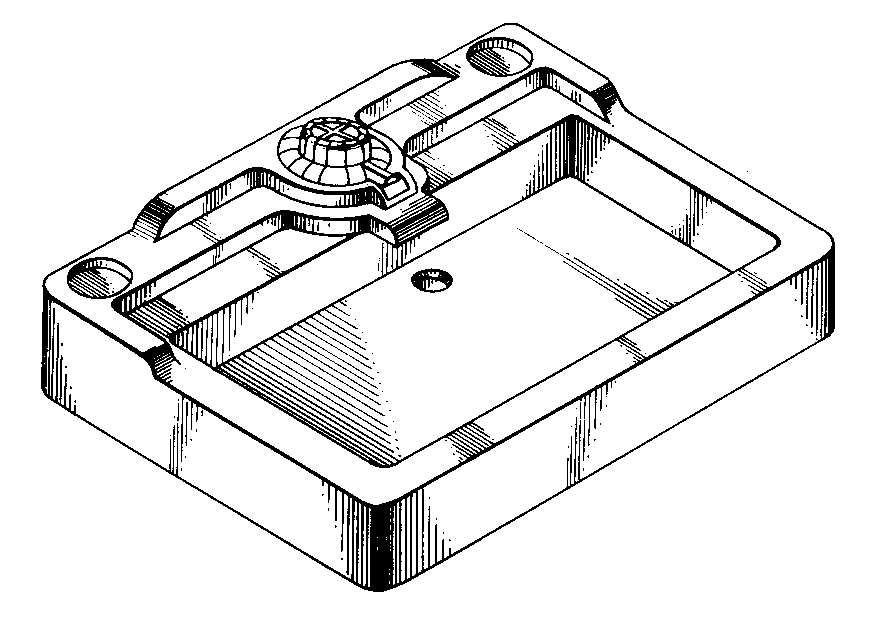
- **Design Patents:** Protect the ornamental appearance of a product
### Trade Secrets: Private Protection
Trade secrets protect confidential business information that provides a competitive advantage, with no expiration date as long as secrecy is maintained.
## When to Choose Patents
### Strong Patent Candidates:
1. **Innovations that are easily reverse-engineered**
- Mechanical devices with visible components
- Consumer products with obvious functionality
- Manufacturing processes that produce detectable results
2. **Licensing opportunities exist**
- Technology that others might want to license
- Innovations with broad industry applications
- Products suitable for multiple markets
3. **Strong defensive position needed**
- Preventing competitors from patenting similar ideas
- Building a patent portfolio for negotiations
- Establishing market leadership credentials
### Real Example from Our Practice:
A client developed a unique automotive brake component. Since the part was visible and could be easily reverse-engineered once installed, we recommended patent protection. The patent not only protected their innovation but also attracted licensing inquiries from major automotive suppliers.
## When to Choose Trade Secrets
### Strong Trade Secret Candidates:
1. **Complex manufacturing processes**
- Proprietary chemical formulations
- Specialized manufacturing techniques
- Quality control procedures
2. **Software algorithms and methods**
- Proprietary calculation methods
- Internal business processes
- Customer data analysis techniques
3. **Innovations difficult to reverse-engineer**
- Internal component designs
- Material specifications
- Process optimization techniques
### Case Study:
A medical device client had developed a proprietary sterilization process. Since the process occurred internally and couldn't be detected from the final product, we advised trade secret protection. This allowed them to maintain their competitive advantage indefinitely without revealing the process details.
## Hybrid Approach: Patents + Trade Secrets
Many successful companies use both protection methods strategically:
- **Patent the visible/detectable innovations** that competitors could reverse-engineer
- **Keep manufacturing processes and internal methods as trade secrets**
- **Patent core functionality while protecting optimization techniques as trade secrets**
## Decision Framework
### Ask These Key Questions:
1. **Can competitors figure out how it works from the final product?**
- Yes → Consider patent protection
- No → Trade secret may be better
2. **Do you plan to license the technology?**
- Yes → Patents provide clearer licensing framework
- No → Trade secrets may be sufficient
3. **How long will your competitive advantage last?**
- Short-term (5-10 years) → Patents may be optimal
- Long-term advantage → Trade secrets might be better
4. **What are your resources for enforcement?**
- Limited budget → Trade secrets may be more cost-effective
- Adequate resources → Patents provide stronger protection
## Cost Considerations
### Patent Costs:
- Filing fees: $1,500 - $15,000+ depending on complexity
- Attorney fees: $5,000 - $20,000+ for preparation and prosecution
- Maintenance fees over patent life
- International filing costs if global protection needed
### Trade Secret Costs:
- Minimal filing costs
- Internal security measures and employee agreements
- Ongoing confidentiality management
- Risk of loss if secrecy is breached
## Implementation Best Practices
### For Patents:
1. **Document everything** during development
2. **File early** - U.S. is first-to-file system
3. **Consider international protection** for global markets
4. **Plan for prosecution process** (1-3 years typically)
### For Trade Secrets:
1. **Implement security measures** (physical and digital)
2. **Use confidentiality agreements** with employees and partners
3. **Limit access** on need-to-know basis
4. **Document security procedures**
## How DesignForge Can Help
Our patent assistance services include:
- **Innovation assessment** and protection strategy development
- **Patent search and analysis** to understand the landscape
- **Technical drawings and documentation** for patent applications
- **Prior art analysis** to assess patentability
- **Coordination with patent attorneys** for legal filing
- **Trade secret identification** and protection planning
## Making the Right Choice
The decision between patents and trade secrets isn't always clear-cut, but with proper analysis and strategic thinking, you can choose the protection method that best serves your business goals.
**Need help deciding?** Contact DesignForge Engineering for a confidential consultation. We'll assess your innovation and recommend the protection strategy that makes the most sense for your specific situation.
[Schedule Your Patent Strategy Consultation →](/contact)
One of the most critical decisions small businesses and entrepreneurs face is how to protect their engineering innovations. Should you file for a patent or keep it as a trade secret? After assisting with hundreds of patent applications over 20 years, here's our practical guide to making this crucial decision.
## Understanding Your Options
### Patents: Public Protection
A patent gives you exclusive rights to your invention for a limited time (typically 20 years) in exchange for public disclosure of your innovation.
**Types of Patents We Help With:**
- **Utility Patents:** Protect how something works or is used
- **Design Patents:** Protect the ornamental appearance of a product
### Trade Secrets: Private Protection
Trade secrets protect confidential business information that provides a competitive advantage, with no expiration date as long as secrecy is maintained.
## When to Choose Patents
### Strong Patent Candidates:
1. **Innovations that are easily reverse-engineered**
- Mechanical devices with visible components
- Consumer products with obvious functionality
- Manufacturing processes that produce detectable results
2. **Licensing opportunities exist**
- Technology that others might want to license
- Innovations with broad industry applications
- Products suitable for multiple markets
3. **Strong defensive position needed**
- Preventing competitors from patenting similar ideas
- Building a patent portfolio for negotiations
- Establishing market leadership credentials
### Real Example from Our Practice:
A client developed a unique automotive brake component. Since the part was visible and could be easily reverse-engineered once installed, we recommended patent protection. The patent not only protected their innovation but also attracted licensing inquiries from major automotive suppliers.
## When to Choose Trade Secrets
### Strong Trade Secret Candidates:
1. **Complex manufacturing processes**
- Proprietary chemical formulations
- Specialized manufacturing techniques
- Quality control procedures
2. **Software algorithms and methods**
- Proprietary calculation methods
- Internal business processes
- Customer data analysis techniques
3. **Innovations difficult to reverse-engineer**
- Internal component designs
- Material specifications
- Process optimization techniques
### Case Study:
A medical device client had developed a proprietary sterilization process. Since the process occurred internally and couldn't be detected from the final product, we advised trade secret protection. This allowed them to maintain their competitive advantage indefinitely without revealing the process details.
## Hybrid Approach: Patents + Trade Secrets
Many successful companies use both protection methods strategically:
- **Patent the visible/detectable innovations** that competitors could reverse-engineer
- **Keep manufacturing processes and internal methods as trade secrets**
- **Patent core functionality while protecting optimization techniques as trade secrets**
## Decision Framework
### Ask These Key Questions:
1. **Can competitors figure out how it works from the final product?**
- Yes → Consider patent protection
- No → Trade secret may be better
2. **Do you plan to license the technology?**
- Yes → Patents provide clearer licensing framework
- No → Trade secrets may be sufficient
3. **How long will your competitive advantage last?**
- Short-term (5-10 years) → Patents may be optimal
- Long-term advantage → Trade secrets might be better
4. **What are your resources for enforcement?**
- Limited budget → Trade secrets may be more cost-effective
- Adequate resources → Patents provide stronger protection
## Cost Considerations
### Patent Costs:
- Filing fees: $1,500 - $15,000+ depending on complexity
- Attorney fees: $5,000 - $20,000+ for preparation and prosecution
- Maintenance fees over patent life
- International filing costs if global protection needed
### Trade Secret Costs:
- Minimal filing costs
- Internal security measures and employee agreements
- Ongoing confidentiality management
- Risk of loss if secrecy is breached
## Implementation Best Practices
### For Patents:
1. **Document everything** during development
2. **File early** - U.S. is first-to-file system
3. **Consider international protection** for global markets
4. **Plan for prosecution process** (1-3 years typically)
### For Trade Secrets:
1. **Implement security measures** (physical and digital)
2. **Use confidentiality agreements** with employees and partners
3. **Limit access** on need-to-know basis
4. **Document security procedures**
## How DesignForge Can Help
Our patent assistance services include:
- **Innovation assessment** and protection strategy development
- **Patent search and analysis** to understand the landscape
- **Technical drawings and documentation** for patent applications
- **Prior art analysis** to assess patentability
- **Coordination with patent attorneys** for legal filing
- **Trade secret identification** and protection planning
## Making the Right Choice
The decision between patents and trade secrets isn't always clear-cut, but with proper analysis and strategic thinking, you can choose the protection method that best serves your business goals.
**Need help deciding?** Contact DesignForge Engineering for a confidential consultation. We'll assess your innovation and recommend the protection strategy that makes the most sense for your specific situation.
[Schedule Your Patent Strategy Consultation →](/contact)
Tags
Patents
Trade Secrets
Intellectual Property
Innovation Protection
DesignForge Engineering Team
The DesignForge Engineering team brings over 20 years of hands-on manufacturing and engineering experience to every project. Our insights come from real-world applications across automotive, aerospace, medical devices, and consumer products industries.